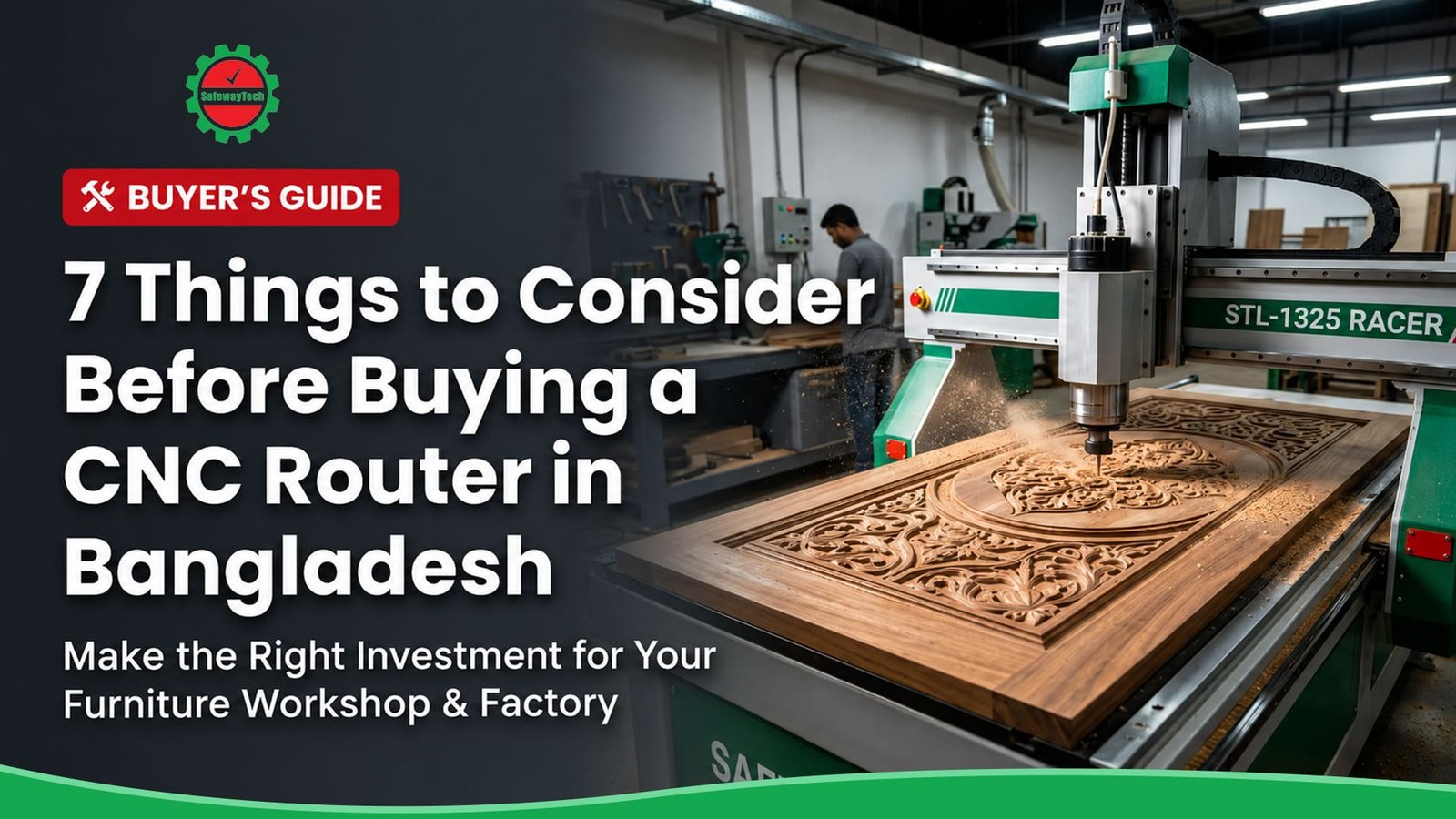
If you run a furniture workshop, sign-making business, or a small manufacturing unit in Bangladesh, you’ve probably reached the point where cutting and carving by hand is holding you back. A CNC router machine can multiply your output, cut material waste, and open the door to more complex designs – but only if you buy the right one.
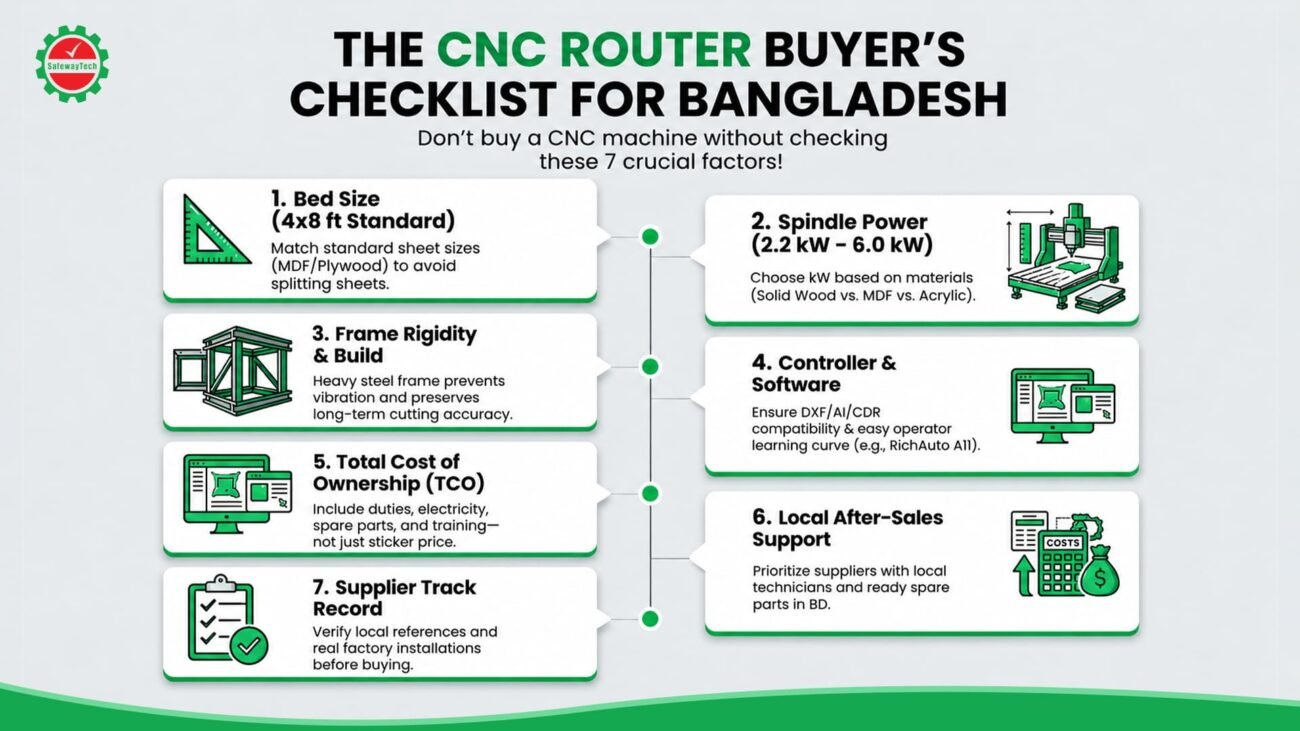
The CNC router machine market in Bangladesh has grown fast, and with that growth comes a lot of noise: dozens of suppliers, wildly different price tags, and specs that mean little unless you know what to look for. Before you commit your capital, here are the seven things that actually determine whether a machine will pay for itself or sit underused in a corner of your shop.
1. Match the Bed Size to Your Real Production, Not Your Biggest Dream Project
The bed (or table) size decides the maximum sheet you can cut in one pass. Standard plywood and MDF sheets in Bangladesh are typically 4 ft x 8 ft, so a machine with at least that working area is the safe default for furniture and cabinetry work. Going smaller to save money often backfires – you end up splitting sheets and wasting material and time, which quietly erodes the savings you thought you were getting. Going much larger than you need, on the other hand, ties up floor space and pushes up machine cost for no real production gain.
Before you shortlist a machine, measure your most common job sizes over the last six months and let that data – not a sales pitch – decide the bed size.
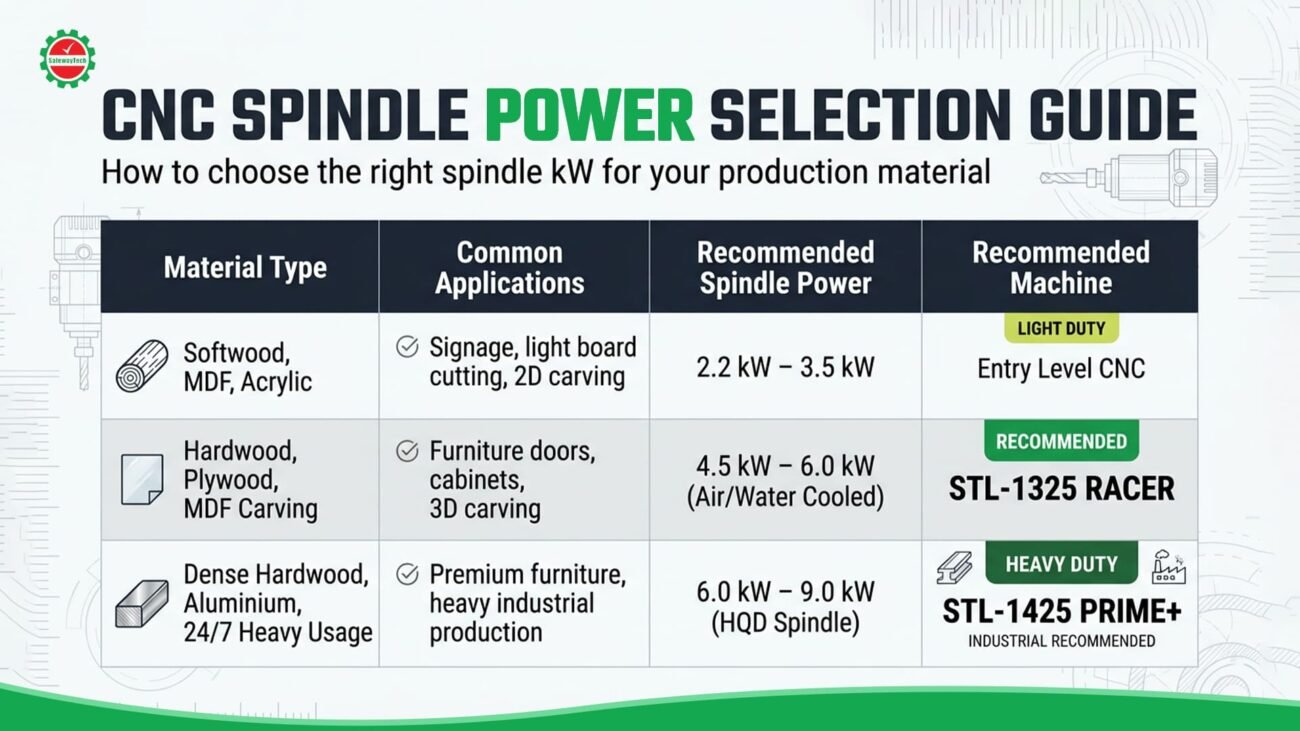
2. Spindle Power and Speed Decide What Materials You Can Actually Cut
The spindle is the working heart of the machine. Its power (measured in kW) and rotation speed determine which materials you can cut cleanly and how fast you can move through a job. Light hobby-grade routers typically run 1.5–3 kW, general woodworking machines sit in the 4.5 – 6 kW range, and machines meant for denser hardwoods or occasional aluminium work usually need 4.5 kW and up. Harder materials need lower spindle speeds and higher torque, while softer materials can be cut faster.
If your business plan includes a mix of MDF, solid wood, and acrylic – which is common for furniture and signage workshops in Dhaka and Chattogram – don’t buy the minimum spindle spec. Undersized spindles burn out early and produce rough edges that mean extra finishing labor.
3. Frame Rigidity and Build Quality Affect Long-Term Accuracy
Two machines can list identical specs on paper and perform very differently once the gantry starts moving at speed. A rigid steel frame resists vibration and flex, which is what actually keeps your cuts accurate over months of daily use – not just on day one. Cheaper frames may look fine in a showroom demo but start showing chatter marks, uneven edges, and drift within a few months of continuous production.
Ask for a live test cut on material similar to what you’ll actually produce, not just a demo video. This single step catches more real-world problems than any spec sheet comparison.
4. Control System and Software Compatibility
The controller and its software decide how easy the machine is to operate, how quickly your team can be trained, and how well it works with the design files you already use (DXF, AI, CDR files are common in Bangladeshi sign and furniture shops). A machine with a widely supported control system will have more available spare parts, more local technicians familiar with it, and an easier learning curve for new operators – all of which matter far more once the machine is running your daily production than they seem to during the buying decision.
5. Total Cost of Ownership, Not Just the Sticker Price
The purchase price is only part of the equation. Factor in:
- Import duty and shipping (most CNC routers sold in Bangladesh are imported)
- Installation and operator training
- Spare parts availability and lead time
- Electricity consumption of the spindle motor
- Dust extraction and maintenance costs
A slightly cheaper machine that requires imported spare parts with a six-week lead time can cost you far more in downtime than a marginally pricier machine backed by local stock and service. When comparing best CNC router price BD listings, always ask what’s included — installation, training, and warranty terms vary a lot between suppliers even at similar price points.
6. After-Sales Support and Local Technical Service
This is the factor most first-time buyers underweight – and the one that matters most once the machine is actually running. A CNC router is a precision machine; alignment, spindle wear, and controller issues are a matter of when, not if. A supplier with local branches, trained technicians, and genuine spare parts on hand in Bangladesh will get you back to production in hours instead of weeks. Ask any supplier directly: where are their service centers, and how fast can a technician reach your factory?
7. Supplier Track Record for Furniture and Industrial CNC Projects
Finally, look at who else the supplier has equipped. A vendor with a strong track record supplying furniture CNC machine setups to manufacturers of comparable scale to yours is far more likely to recommend the right configuration – rather than upselling you on power you don’t need or underselling you on a machine that can’t keep up with your order volume. Ask for references, site visits, or case studies from similar production environments before signing anything.
Making the Right Investment
A CNC router is one of the biggest capital decisions a furniture or manufacturing business in Bangladesh will make in a given year. Getting the bed size, spindle power, and after-sales support right from day one is what separates a machine that pays for itself within 12–18 months from one that becomes a maintenance headache.
If you’re evaluating options, Safeway Technologies Ltd. supplies and installs a full range of CNC router, fiber laser, and woodworking machinery across Bangladesh, with free installation and training included on every machine. Our team can help you match the right specification to your actual production volume rather than a one-size-fits-all package – get in touch with our team for a consultation and quote.